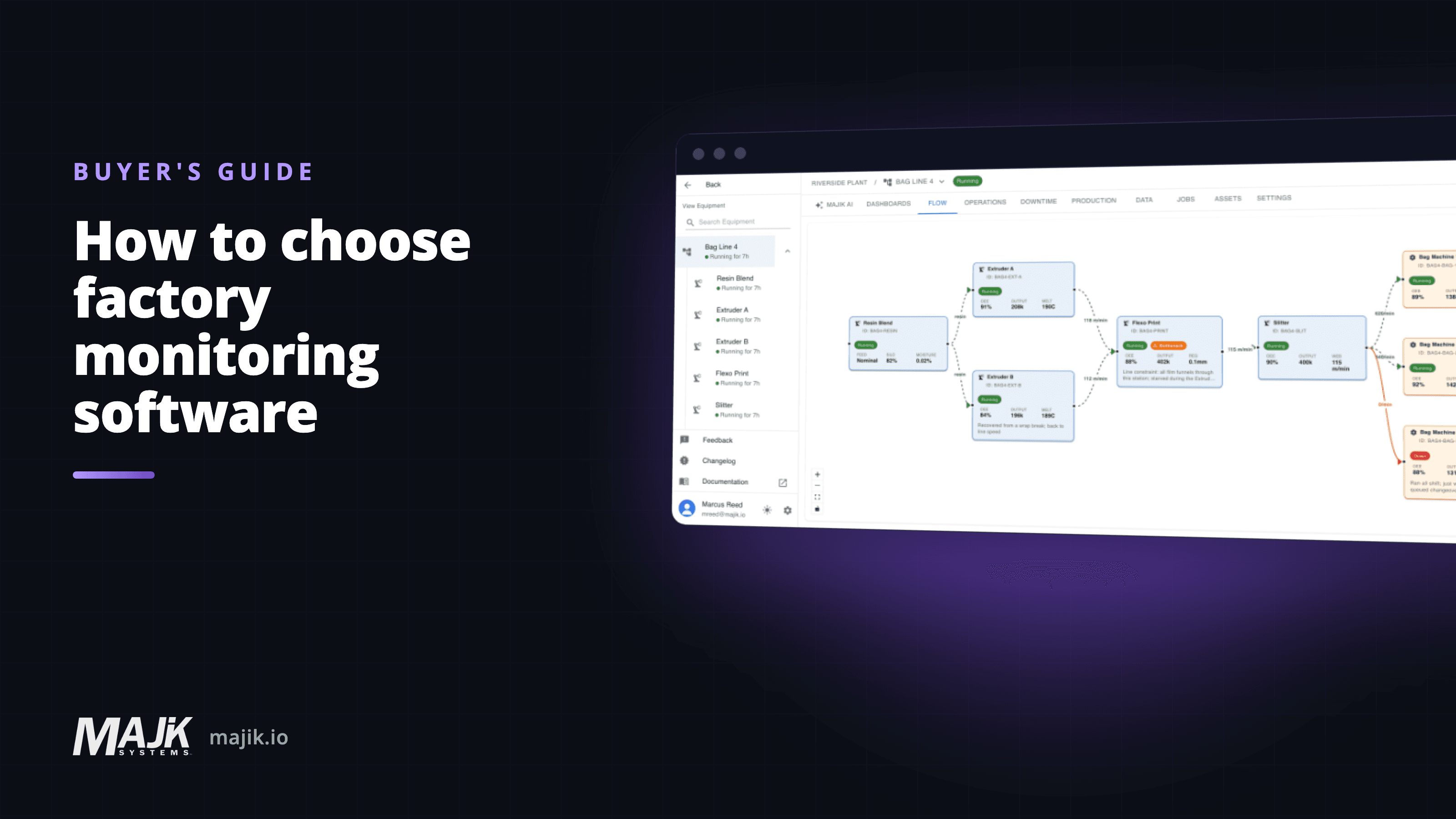
FeaturedGetting Started
How to choose factory monitoring software in 2026
Five things to judge it on, in order, so you end up with a tool that is live and trusted on the shop floor in weeks rather than a stalled project.
9 min read

Manufacturing intelligence insights and updates
Five things to judge it on, in order, so you end up with a tool that is live and trusted on the shop floor in weeks rather than a stalled project.
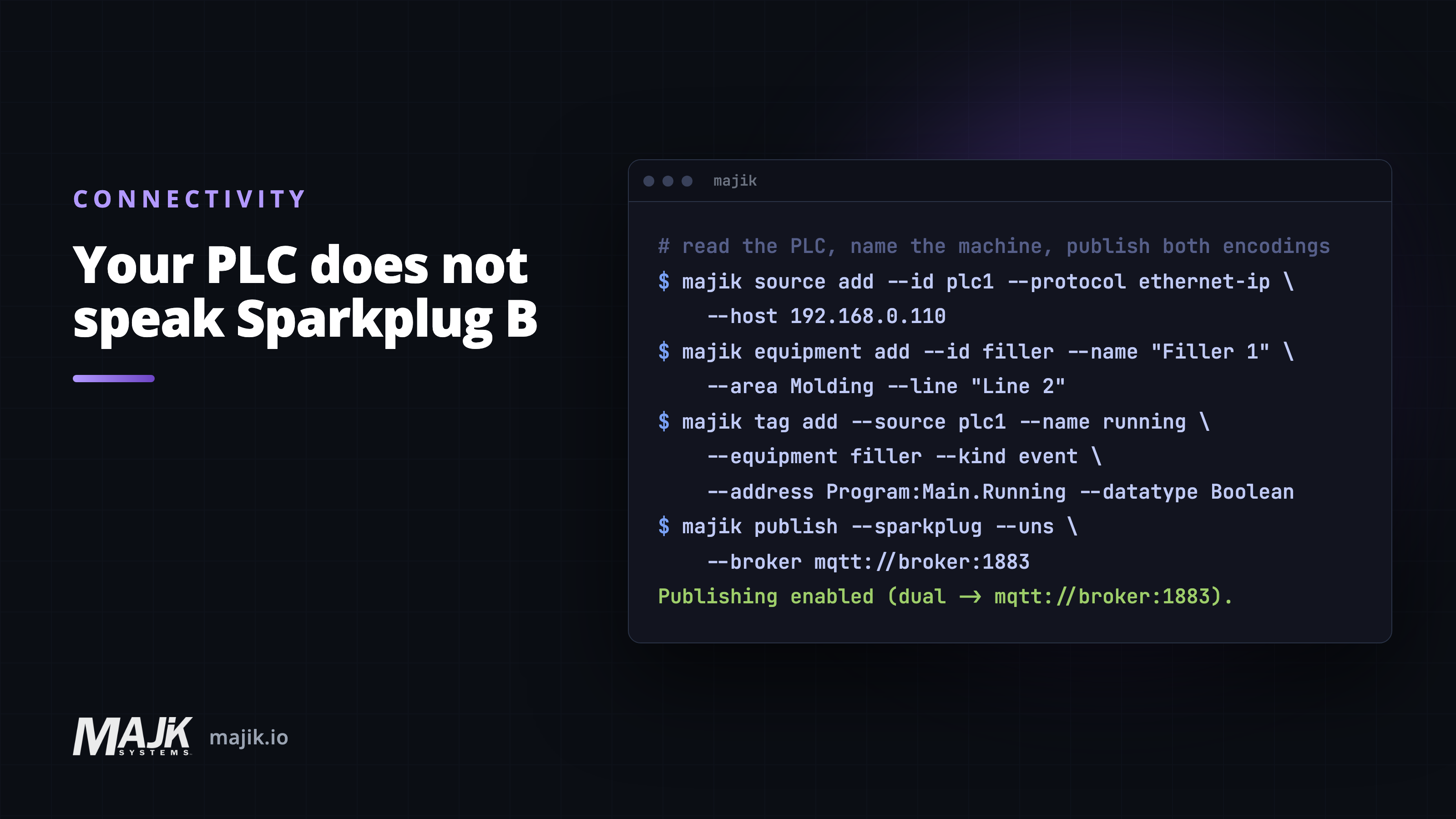
Most machine controllers cannot send Sparkplug B on their own. Here is what the edge node in front of them has to do, and how to publish one machine in four commands.
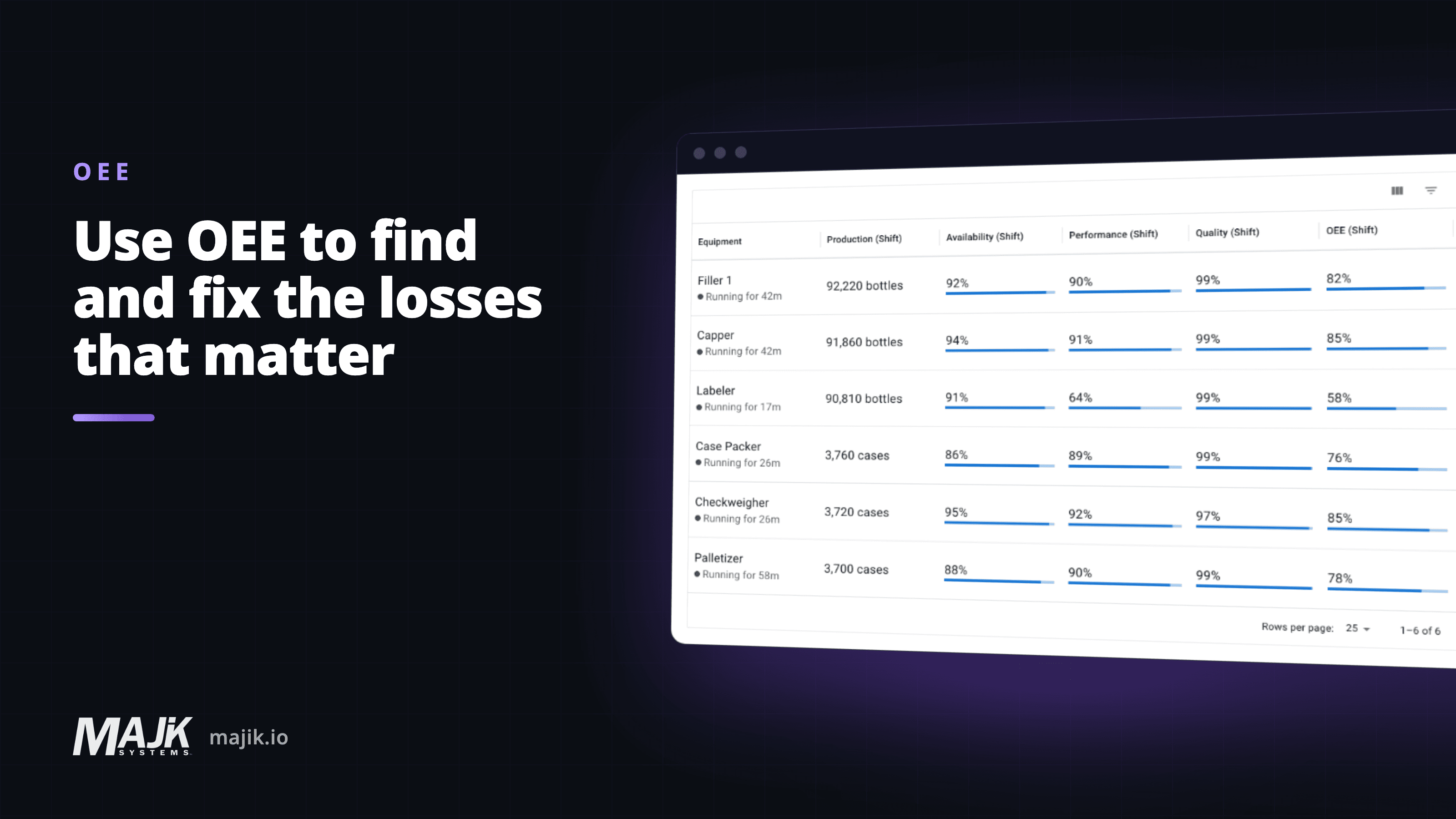
OEE shows how effectively scheduled production time was used, not how much you made. See what OEE is, what it is not, and how to use it to find and fix the losses that matter.

A live picture of your factory data that every system reads from, published straight off your PLCs by a single edge agent.
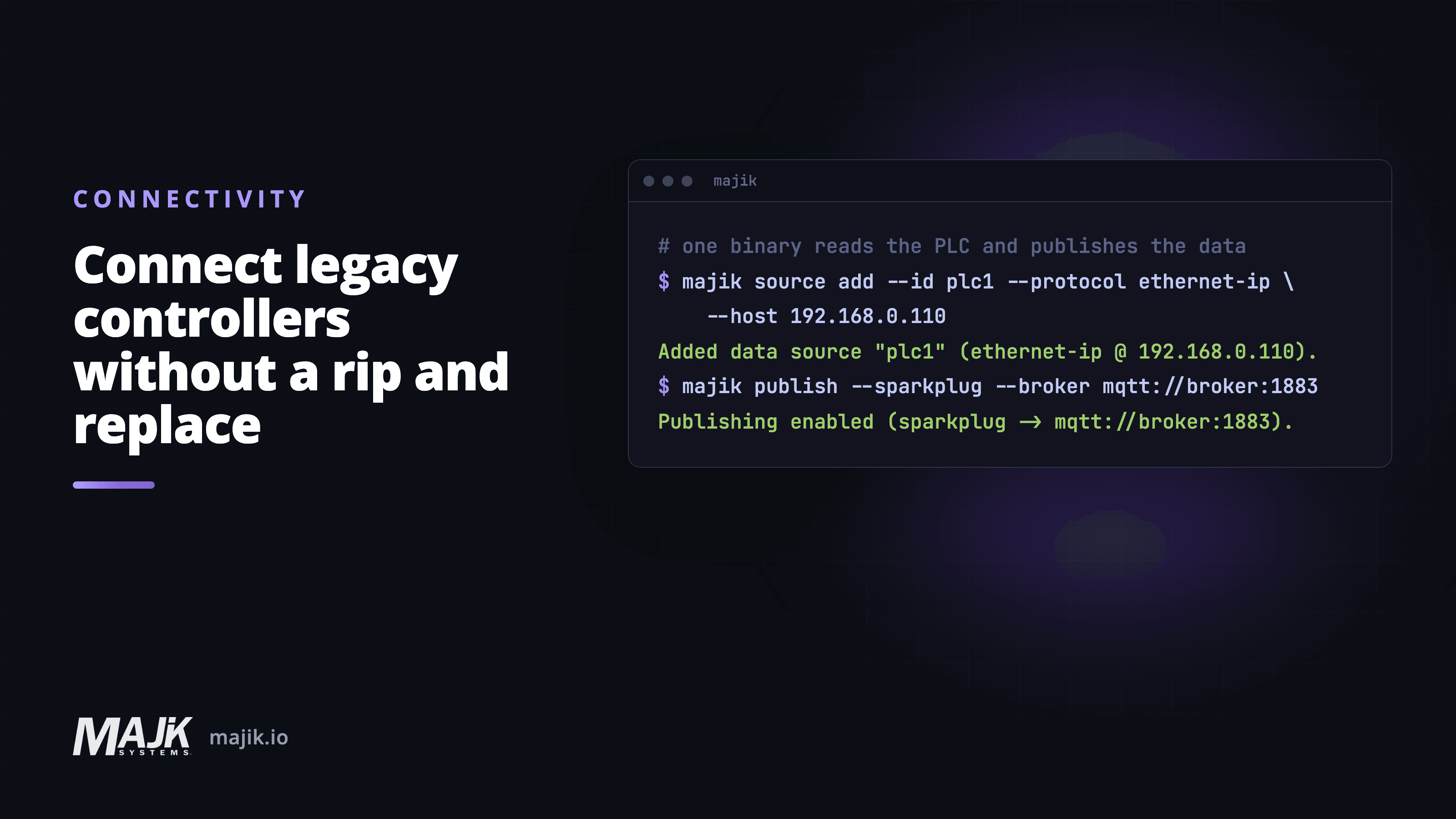
Older PLCs and serial devices can stream live data today. Here is the connectivity path that avoids touching the control logic.
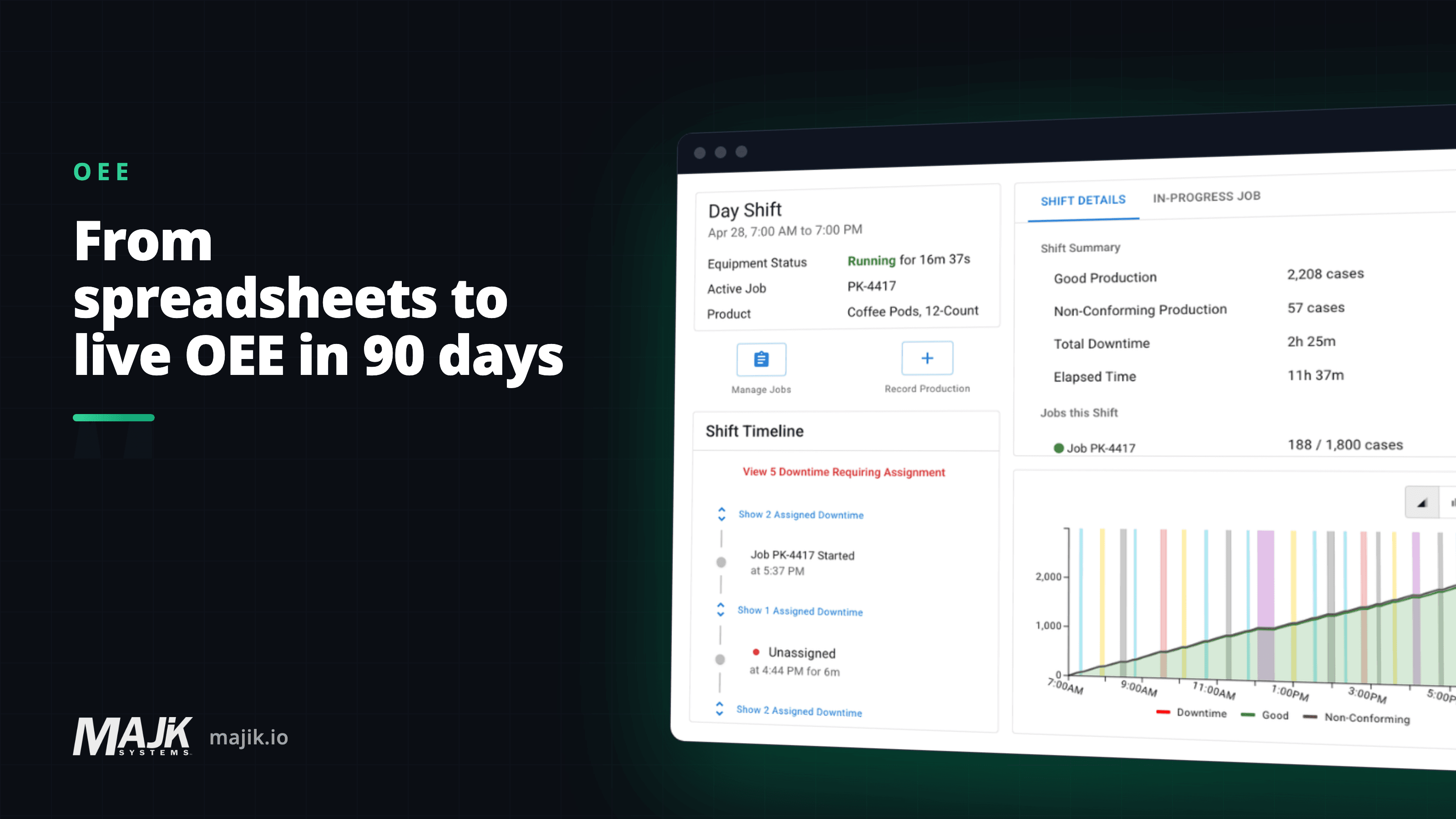
How a packaged-goods producer moved from end-of-shift recaps to live, shop-floor-visible performance without replacing a controller.
Maintenance teams ignore alerts they do not trust. Here is how to earn that trust with the very first one.
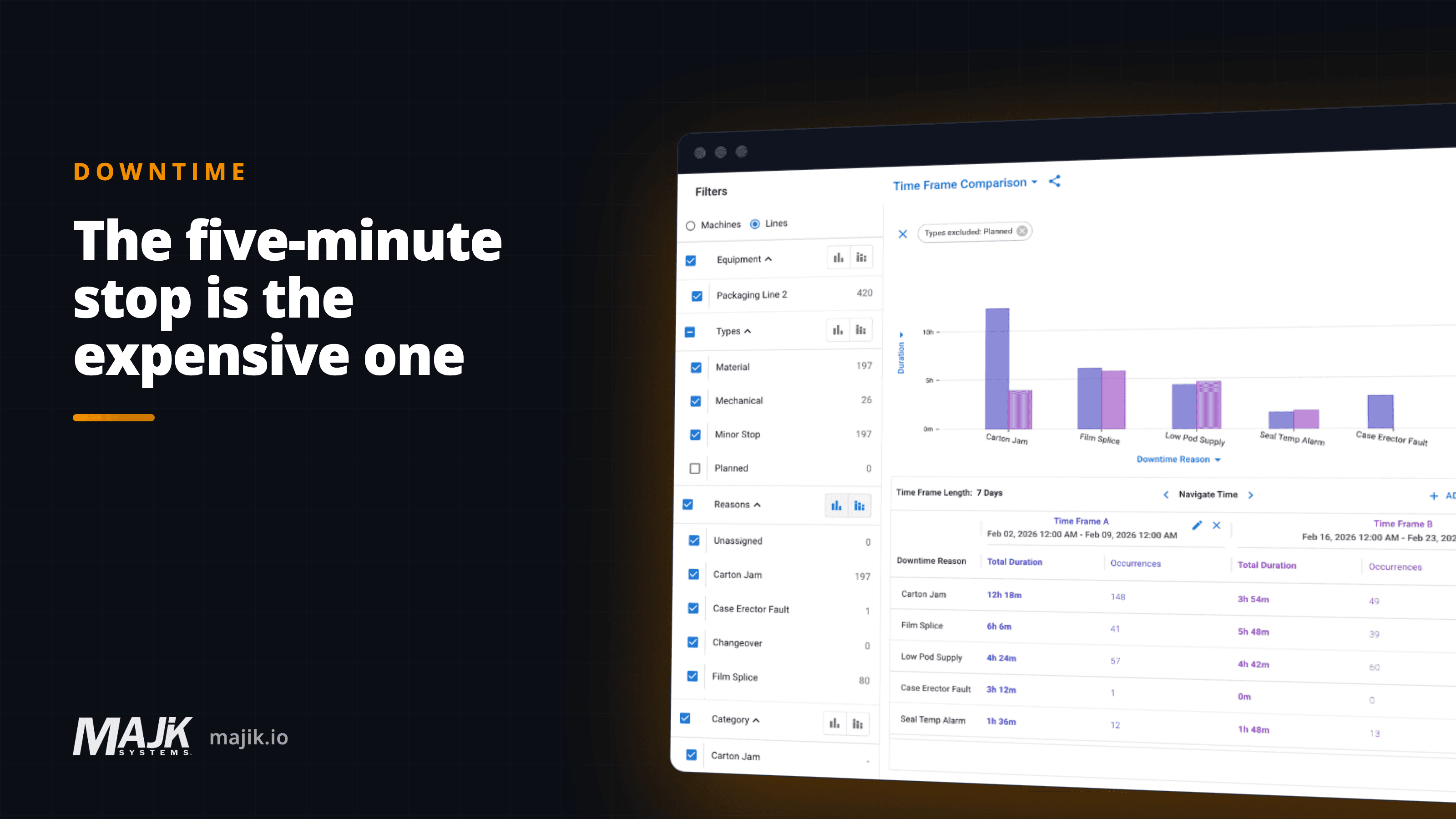
Short, frequent stops rarely get logged, yet they often cost more than the big breakdown everyone remembers.